




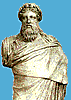
 According to mythology, Zeus, father of the gods, was born in Crete but
grew up in Naxos. He fell in love with Semeli, daughter of the king of Thebes
Kadmus, and she bore him Dionysus, the god of wine and merriment. His birth
was quite extraordinary since Semeli died, thunderstruck from the divine
hypostasis of Zeus, and the foetus grew inside his father's thigh. Dionysus
was born in Naxos and loved the island so much that he made it fertile and
endowed it with vineyards which produced excellent wine. Another myth tells
us that Theseus, on his return from Crete after he killed Minotaur, stopped
at Naxos so Ariadne, who had followed him, could rest. He dreamt of Dionysus,
who ordered him to abandon Ariadne. Theseus, fearing the god's rage, left
and Dionysus seized Ariadne and took her to mount Drios. Ariadne bore Zeus
Oinopion (Wine Drinker), Stafylos (Grape), and Evanthi (Lovely Flower).
According to mythology, Zeus, father of the gods, was born in Crete but
grew up in Naxos. He fell in love with Semeli, daughter of the king of Thebes
Kadmus, and she bore him Dionysus, the god of wine and merriment. His birth
was quite extraordinary since Semeli died, thunderstruck from the divine
hypostasis of Zeus, and the foetus grew inside his father's thigh. Dionysus
was born in Naxos and loved the island so much that he made it fertile and
endowed it with vineyards which produced excellent wine. Another myth tells
us that Theseus, on his return from Crete after he killed Minotaur, stopped
at Naxos so Ariadne, who had followed him, could rest. He dreamt of Dionysus,
who ordered him to abandon Ariadne. Theseus, fearing the god's rage, left
and Dionysus seized Ariadne and took her to mount Drios. Ariadne bore Zeus
Oinopion (Wine Drinker), Stafylos (Grape), and Evanthi (Lovely Flower).

 Naxos was first inhabited by Thracians and Pelasgians. They were succeeded
by the Carians and their leader, Naxos, gave his name to the island. Afterwards,
it was taken by the Ionians and developed into a significant civilisation.
During the Persian Wars it took the part of Greece. In 479 BC, it joined
the Delian League from which it defected in 466 BC. After the Athenians'
defeat in the Peloponnesian War, it was taken by the victorious Spartans.
Afterwards, it fell into the possession of the Macedonians and the Ptolemies
respectively and in 41 BC was subjugated to Rome. In 1207, the Venetian
Marco Sanudo conquered the Cyclades and founded the Duchy of the Aegean,
with Naxos as its seat. The island was divided into 56 provinces, which
were distributed to Venetian officials. The Duchy's power lasted for three
centuries. In 1564, Naxos fell to the Turks, but the Venetians remained
the virtual leaders, since the Turks did not inhabit the island for the
fear of pirates. Naxos was liberated in May of 1821 and in 1830 became part
of the newly established Greek state.
Naxos was first inhabited by Thracians and Pelasgians. They were succeeded
by the Carians and their leader, Naxos, gave his name to the island. Afterwards,
it was taken by the Ionians and developed into a significant civilisation.
During the Persian Wars it took the part of Greece. In 479 BC, it joined
the Delian League from which it defected in 466 BC. After the Athenians'
defeat in the Peloponnesian War, it was taken by the victorious Spartans.
Afterwards, it fell into the possession of the Macedonians and the Ptolemies
respectively and in 41 BC was subjugated to Rome. In 1207, the Venetian
Marco Sanudo conquered the Cyclades and founded the Duchy of the Aegean,
with Naxos as its seat. The island was divided into 56 provinces, which
were distributed to Venetian officials. The Duchy's power lasted for three
centuries. In 1564, Naxos fell to the Turks, but the Venetians remained
the virtual leaders, since the Turks did not inhabit the island for the
fear of pirates. Naxos was liberated in May of 1821 and in 1830 became part
of the newly established Greek state.


http://www.areianet.gr/infoxenios/
